Monitoring — vibration
Vibration monitoring deployed, maintained and moved as the works progress.
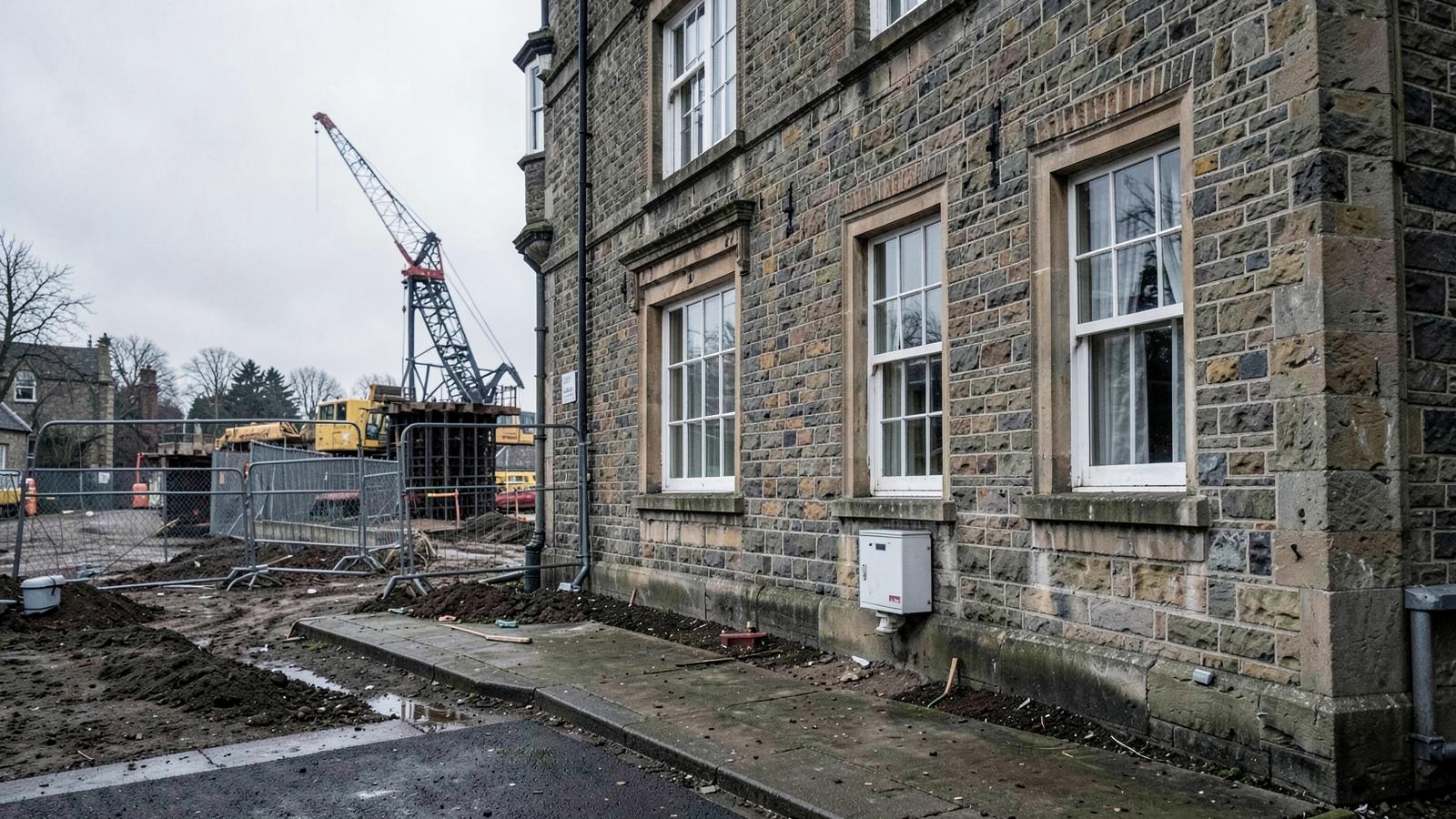
NVD can deploy and manage professional vibration monitoring systems for demolition, piling, excavation and structural works — including positions close to heritage and other sensitive structures — keeping them operational and reporting for the length of the project.
In plain English
What is vibration monitoring?
Vibration monitoring means recording vibration at agreed locations over time, so the project team can see what is happening while potentially vibration-generating works are taking place — while there is still time to adjust the activity, rather than afterwards.
Ground vibration monitoring
Vibration generated through ground-borne activity — piling, excavation, breaking, demolition and general groundworks — recorded at positions agreed for the project.
Building vibration monitoring
Vibration recorded at or on a building or structure where the project requirements call for it, including neighbouring buildings, heritage and listed structures, and other sensitive structures.
Construction vibration monitoring may form part of a project approach developed with reference to BS 5228 where applicable. NVD deploys and operates the monitoring system to the requirements supplied for the project. Project criteria, alarm levels and any specialist interpretation of the recorded data remain with the client or its appointed competent specialist where required.
Where it is used
Typical vibration monitoring situations
Demolition
Recording vibration while structures come down, particularly where neighbouring buildings are close.
Piling
Monitoring through a piling programme, with positions kept operational as the rig moves across the site.
Excavation & earthworks
Deep excavation, breaking out and other groundworks where vibration needs to be recorded against project criteria.
Structural works
Alterations, underpinning and other structural activity affecting or adjoining occupied buildings.
Heritage & sensitive buildings
Positions on or near heritage, listed or otherwise sensitive structures, deployed with care for the fabric of the building.
Rail & infrastructure
Rail and infrastructure environments where access is controlled and attendance has to be planned around it.
In the field
What a vibration monitoring position has to cope with
Once the monitoring position is agreed for the project, these are the practical considerations NVD deals with on site.
- Secure and appropriate sensor mounting or coupling for the surface involved
- A stable installation position that reflects what the project needs to see
- Physical protection from plant, site traffic and ongoing works
- Safe site access for installation and later attendance
- Power and communications suitable for the position and the duration
- Ongoing checks to keep the position powered, connected and recording
- Changes to the work front as the programme moves across the site
- Relocation where the works or project requirements call for it
- Updated geolocation and reporting details after any relocation
What NVD manages
Positions kept live from first deployment to final recovery
Vibration monitoring tends to run through the most disruptive phases of a project, when nobody on site has time to chase an offline sensor.
Deployment at agreed positions
Professional vibration monitoring systems installed at the positions agreed for the project, fixed appropriately for the structure and the duration.
Configuration to project criteria
Configured to the measurement arrangements and criteria supplied for the project, including any warning and action levels.
Power & communications
Power and connectivity arranged so each position keeps reporting, including in constrained or poorly served locations.
System health & uptime
Ongoing checks that positions are live, with faults, power problems and connectivity issues picked up and dealt with by NVD.
Agreed alerts
Notifications against agreed levels sent to the nominated people, so a decision can be made while the activity is still happening.
Scheduled reporting
Structured summaries for the agreed monitoring period, or around specific activities and project stages.
Relocation as work fronts move
Positions moved as demolition or piling progresses across the site, recommissioned and recorded at the new location.
Recovery at completion
Equipment and associated field infrastructure removed at the end of the works, with the position left tidy and a completion record provided.
Before deployment
What to have in mind before the first position goes in
If any deployment information is still outstanding, NVD can help identify what is needed and work alongside the client's appointed specialist where technical criteria or methodology must be supplied.
- Which structures or positions need to be monitored, and how many
- The project criteria, thresholds or trigger levels that apply
- Measurement and logging arrangements required
- Who receives alerts, and how quickly
- Reporting frequency and recipients
- Access arrangements, including any permits, escorts or controlled-access requirements
- Expected duration and the programme of works being monitored
Working alongside specialists
Criteria and technical assessment
NVD manages the practical monitoring deployment and field operation. Project criteria, thresholds and any technical assessment or interpretation of the recorded data can be supplied by the client or its appointed specialist, and NVD deploys and operates the system to those requirements. Reporting provides the agreed monitoring summaries together with the status of the deployed system. Where specialist interpretation of vibration data or structural significance is required, that remains with the client or appointed specialist.
Related
Managed Monitoring Overview
How the managed service works, the monitoring plan, alerts, reporting and system continuity.
Noise Monitoring
Commonly deployed alongside vibration on demolition and piling projects.
Dust & Air Quality Monitoring
Particulate monitoring during demolition, excavation and material handling.
Relocation
How monitoring positions are moved, recommissioned and recorded as projects progress.
Contact NVD
Send the project details and NVD will come back to you.
Send the vibration monitoring requirement
The site, the activity being monitored, the structures involved and the expected programme — that is enough for NVD to come back to you.