Managed Monitoring
Managed environmental monitoring for commercial projects.
For clearly defined monitoring requirements, NVD can arrange the equipment, deploy it, keep it operational and provide alerts and reporting at agreed intervals. The customer receives a complete practical monitoring service rather than an equipment hire product.
In plain English
What environmental monitoring means on a live project
Environmental monitoring means recording relevant site and environmental conditions over time at agreed monitoring locations, so the project has a continuous factual record of what happened and when — rather than an impression formed after the event.
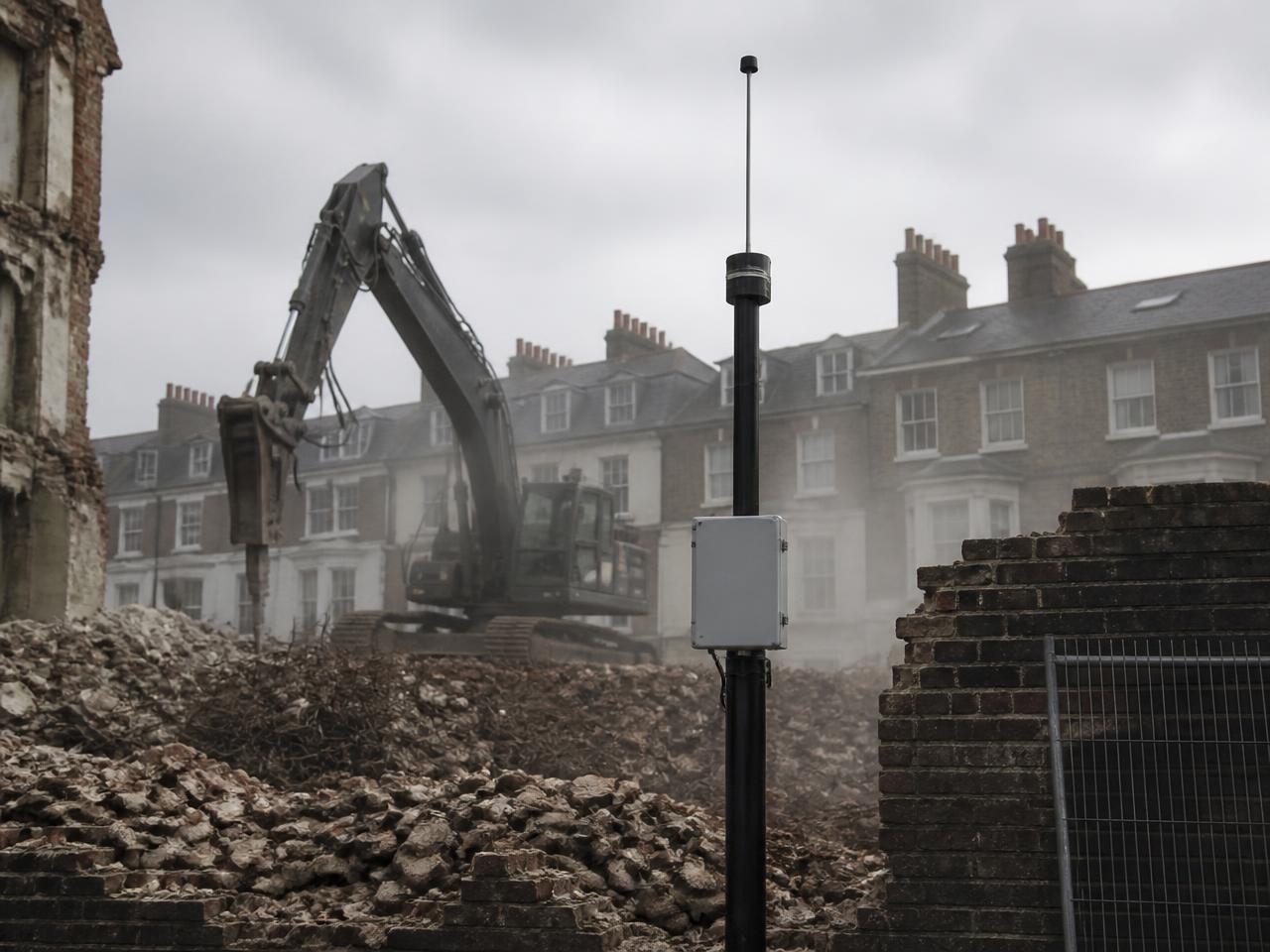
On construction and other commercial projects, that usually means noise monitoring, vibration monitoring, dust, particulate and air quality monitoring — or a combination of them. Noise and vibration monitoring are often deployed together on demolition and piling works, with dust added where earthworks or material handling are involved.
What gets monitored, where, and to what requirements is set by the project. NVD's part is the practical side of construction monitoring: arranging suitable equipment, deploying it at the agreed positions, keeping it operational, and providing the agreed alerts and reporting.
Why monitoring is needed
Common reasons a site or project needs monitoring in place
Monitoring is usually driven by a practical problem or an obligation on the project rather than by curiosity. These are the situations NVD is most often asked about.
Neighbour concern or complaint
Works close to homes have prompted a concern or a complaint, and the site needs an objective record of what is actually happening at the boundary.
Demolition & piling
Demolition or piling near residential or otherwise sensitive property, where noise and vibration need to be recorded while the work is under way.
Sensitive structures nearby
Vibration close to a heritage, listed or otherwise sensitive structure, measured against the criteria set for the project.
Dust from earthworks
Excavation and earthworks in dry conditions raising dust concerns, particularly in urban locations or near occupied buildings.
A project requirement
Monitoring asked for by the client, the project specification, a planning condition, a licence, or an appointed specialist.
Live events
Events and festivals where agreed sound thresholds need live visibility while the event is running, not a report afterwards.
How it works
From requirement to recovery
A managed service means the monitoring is someone's responsibility from the first conversation to the day the last enclosure comes off site.
- 01
Understand the requirement
- 02
Deploy & configure
- 03
Monitor & alert
- 04
Report, relocate, recover
What NVD takes care of
The whole practical operation of the monitoring system
Understanding the requirement
A practical conversation first: what needs monitoring, where, for how long, and what the project or client expects to see.
Equipment arranged
Suitable professional equipment sourced or arranged for the project. NVD may own, hire or sub-hire the hardware — that is NVD's operational responsibility, not something the customer manages.
Deployment & configuration
Installation at the agreed positions and configuration to the agreed project requirements, including thresholds where those have been supplied.
Power & communications
Mains, battery or solar power and the connectivity needed to keep data flowing from the position, including antenna placement where signal is marginal.
System health & uptime
Ongoing checks that each monitoring point is powered, connected and reporting, with faults picked up and dealt with rather than left to the site team.
Alerts & reporting
Live notifications against agreed thresholds where the system supports it, plus scheduled monitoring summaries at the intervals agreed for the project.
Maintenance & fault response
Attendance for faults, power problems, connectivity issues, consumables and equipment swaps, including replacement equipment where it is needed.
Relocation & recovery
Monitoring points moved as the work fronts move, then decommissioned and recovered at the end of the project.
Before deployment
The monitoring plan — what needs deciding or providing
Some requirements come from the customer, some from the project specification and some from an appointed specialist. If information is still outstanding, NVD can help identify what is needed for deployment and work alongside the appointed specialist where technical input is required. These requirements determine the scope of the service and final cost.
- What is being monitored — noise, vibration, dust and air quality, or a combination
- The site and the specific monitoring locations
- Number of monitoring points required
- Relevant measurement parameters for the project
- Sampling and logging requirements
- Agreed thresholds and any warning and action levels
- Who receives alerts, and how
- Reporting frequency and who the reports go to
- Power and communications arrangements at each position
- Site access arrangements, including any permits or inductions
- Expected duration of the monitoring
- Maintenance expectations and what happens to the data
Alerts and reports
Reporting and alerts tailored to your project, from live notifications to scheduled monitoring summaries
Alert
Something has happened now. An agreed threshold has been reached and the nominated person may need to act, or make a decision about the activity on site. Alerts go to the people you nominate, by the method agreed at the start of the project, and are available where the deployed system supports them.
Report
A structured summary covering the agreed monitoring period, for the project record. Scheduled weekly, fortnightly or monthly, around events, around project stages, or at another interval agreed with you.
System continuity
NVD takes ownership of keeping the monitoring point operational.
Where NVD supplies or arranges the monitoring equipment as part of the service, NVD takes responsibility for practical system uptime — faults, power, batteries, communications, maintenance and replacement equipment where it is needed.
Where NVD-supplied monitoring equipment fails or is damaged, NVD aims to restore the monitoring point or deploy replacement equipment within 48 hours, subject to safe access, site access, equipment availability and project constraints.
The same field capability is available on its own where equipment is supplied by others — see maintenance and fault response.
Working alongside specialists
Where a specialist is involved
NVD manages the practical monitoring deployment and field operation. Where a project requires specialist assessment, interpretation, methodology or limit-setting, NVD works to the requirements supplied by the client or its appointed specialist. If specialist input has not yet been defined, include that in the project details so the deployment requirements can be established correctly.
Related
Noise Monitoring
Construction, demolition, neighbour concerns, long-term site monitoring and live events.
Vibration Monitoring
Demolition, piling, excavation and works near heritage, listed or sensitive structures.
Dust & Air Quality Monitoring
Earthworks, material handling, urban and roadside environments where particulate data is needed.
Field Services
The core business — field support for consultancies, monitoring companies, manufacturers and hire companies.
Contact NVD
Send the project details and NVD will come back to you.
Tell NVD what the project needs monitoring for
Send the location, what is being monitored, how long it is likely to run and who needs to see the data. NVD will come back to you with a practical proposal.