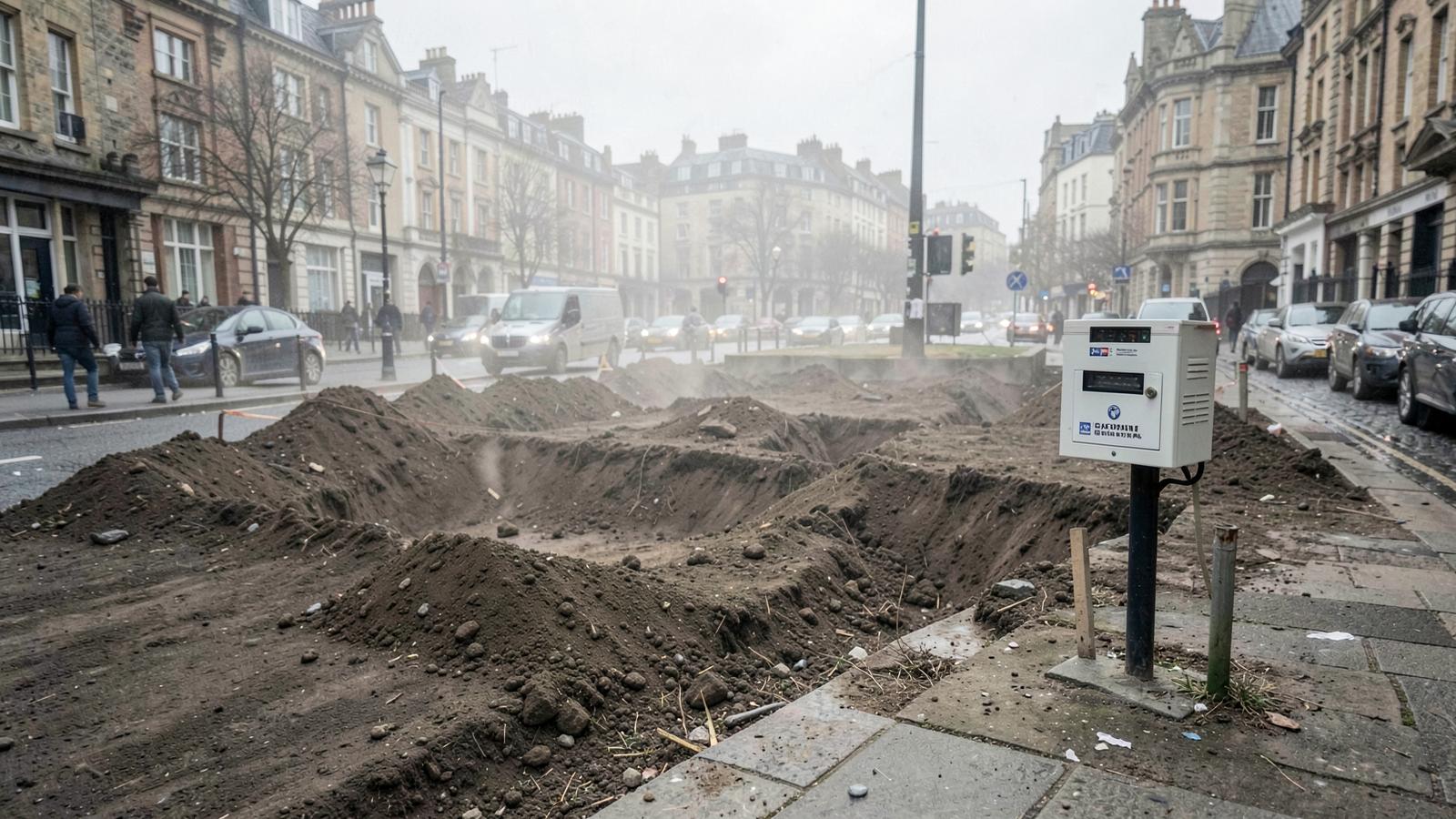
Monitoring — dust & air quality
Dust and air quality monitoring, arranged and managed around the works.
NVD can provide practical dust and air quality monitoring as a managed service — the equipment arranged to the project requirement, deployed at agreed positions, kept operational and consumables attended to, with alerts and reporting as agreed.
In plain English
What is dust monitoring?
Construction dust monitoring records airborne particulate conditions over time at agreed positions, giving a project a continuous record during activities such as demolition, excavation, earthworks, material handling, haul-road activity and extended dry construction conditions.
Common particulate parameters include PM10 and PM2.5, where the project specification and the selected equipment call for them. Not every monitoring system measures the same parameters, so what is recorded depends on the system deployed and what the project has asked for.
The monitoring approach and position can depend on the project's dust risk assessment, dust-management arrangements, sensitive receptors, site conditions and any project or local-authority requirements. Where specialist judgement is required, NVD deploys and operates the system to the requirements supplied by the appropriate project team or appointed specialist.
In the field
What a dust monitoring position has to cope with
Once the monitoring location is agreed for the project, these are the practical deployment and operation considerations NVD deals with.
- The monitoring location agreed for the project
- Physical security of the equipment at the position
- Inlet or sensor exposure, kept clear and appropriate for the location
- Safe access for installation and for routine attendance
- Mains, battery or solar power for the expected duration
- Cellular communications, and antenna position where relevant
- Cleaning, filter changes and consumables where the selected system requires them
- Movement of the works and the areas generating dust
- Future relocation as the exposed areas and work fronts shift
- Site conditions that may affect the installation over time
Where it is used
Typical dust and air quality situations
Demolition
Dust generated as structures come down, particularly on constrained sites with occupied buildings close by.
Excavation & earthworks
Bulk earthworks and excavation, where dry weather and exposed ground raise dust levels quickly.
Dry construction conditions
Extended dry spells on any active site, where activity that is normally unremarkable starts generating visible dust.
Material handling
Movement, crushing and stockpiling of hardcore and other materials, and haul routes across a site.
Roadside & urban environments
Positions on busy streets and in dense urban locations where existing background conditions matter as much as the works.
Sensitive urban locations
Historic centres, busy streets and other air-quality-sensitive urban locations where existing conditions are already a local concern.
What NVD manages
A monitoring service, not a box on hire
Some dust and air-quality systems require routine consumable, filter and cleaning attention. Where the selected system requires it, NVD manages that as part of the service.
Equipment to the requirement
Equipment selected or arranged to suit the project and the parameters required, rather than a single fixed system offered for everything.
Deployment at agreed positions
Installation at the monitoring positions agreed for the project, mounted for the location, exposure and expected duration.
Power & connectivity
Mains, battery or solar power and communications arranged so each position keeps reporting.
Consumables & routine attention
Filter changes, cleaning and other routine consumable attention where the selected system requires it.
System health & fault response
Ongoing checks that positions are live, with faults, power problems and connectivity issues dealt with by NVD.
Alerts & reporting
Threshold alerts where the deployed system supports them and they have been agreed, plus scheduled monitoring summaries at the agreed interval.
Relocation
Positions moved as the works and the exposed areas shift across the site, then recommissioned and recorded.
Recovery at completion
Equipment and field infrastructure removed at the end of the monitoring period, with a completion record provided.
Parameters & equipment
Measured parameters depend on the project and the system deployed
Common particulate parameters can include PM10 and PM2.5, depending on the project specification and the monitoring system selected. Other parameters may also be available. The required parameters are agreed at the outset and the equipment is arranged accordingly. NVD is manufacturer-neutral and will also work with equipment the client already has or has specified.
Before deployment
What to have in mind before the first position goes in
If any deployment information is still outstanding, NVD can help identify what is needed and work alongside the client's appointed specialist where technical criteria or methodology must be supplied.
- Which parameters the project requires — for example particulate measures such as PM10 or PM2.5 where the specification or selected equipment calls for them
- Monitoring positions and how many are needed
- Sampling, averaging and logging requirements
- Any thresholds or trigger levels that apply, and who acts on them
- Reporting frequency and recipients
- Power, connectivity and access arrangements at each position
- Expected duration of the monitoring
Working alongside specialists
Assessment and methodology
NVD manages the practical monitoring deployment and field operation. Where a project requires specialist assessment, interpretation, methodology or limit-setting, NVD works to the requirements supplied by the client or its appointed specialist.
Related
Managed Monitoring Overview
How the managed service works, the monitoring plan, alerts, reporting and system continuity.
Noise Monitoring
Boundary and community noise monitoring for construction, demolition and events.
Vibration Monitoring
Demolition, piling and works near heritage or sensitive structures.
Field Services
NVD's core business — field support for organisations already working in environmental monitoring.
Contact NVD
Send the project details and NVD will come back to you.
Send the dust and air quality requirement
Location, the activity generating the concern, likely monitoring positions and expected duration — that is enough for NVD to come back to you.